PHASE 1 — PROOF OF CONCEPT
inZORi PF-Δ Phase 1: Streaming Power Flow Robustness
Multi-Shocks and N-1 Topology Events on IEEE 118-bus · Bio-Adaptive Genome Selection vs Static Baselines

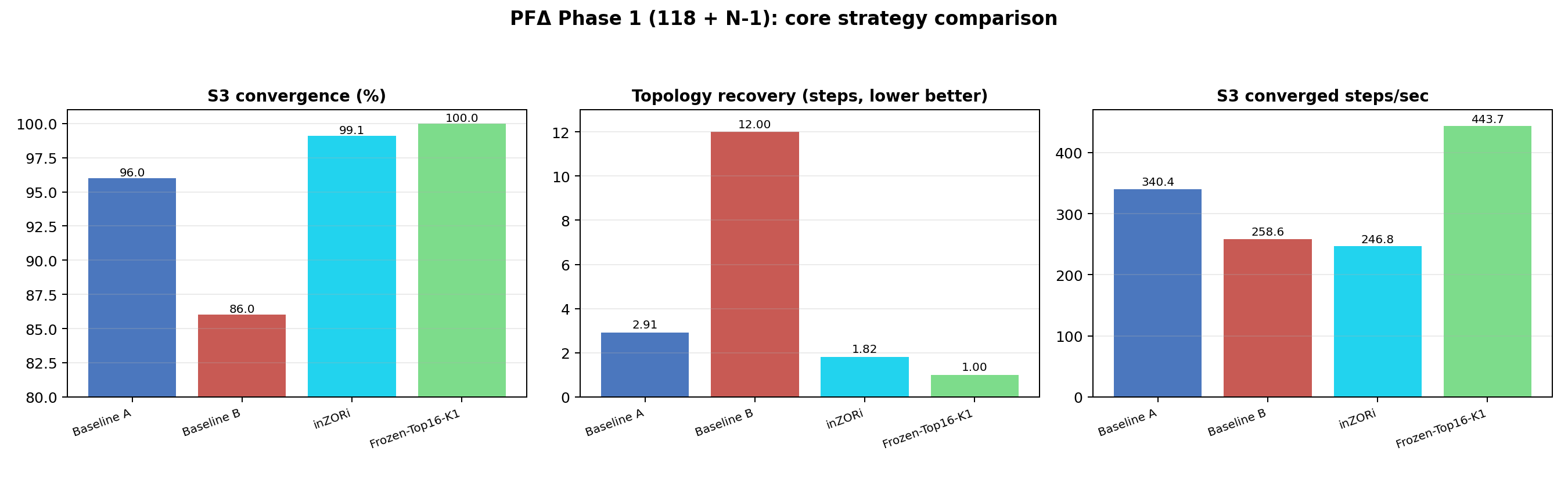
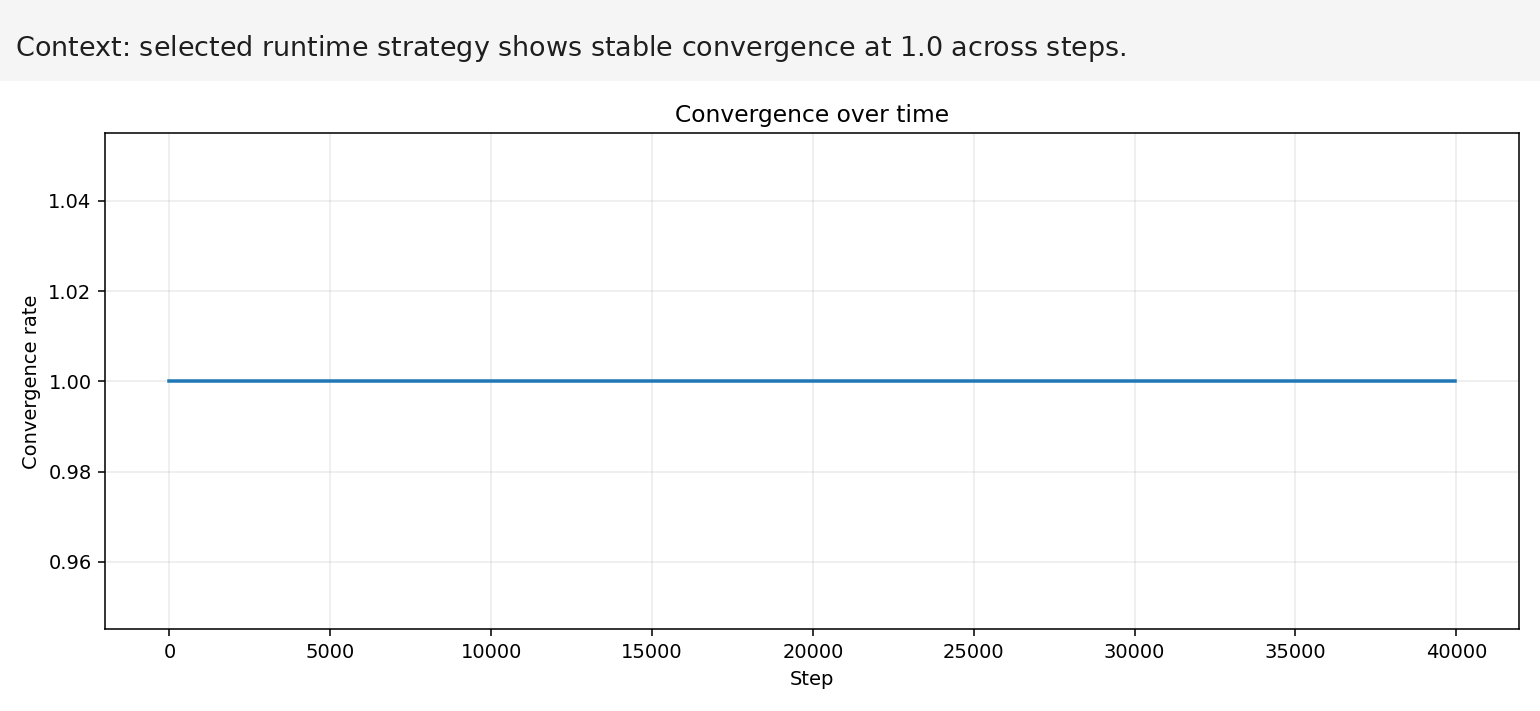
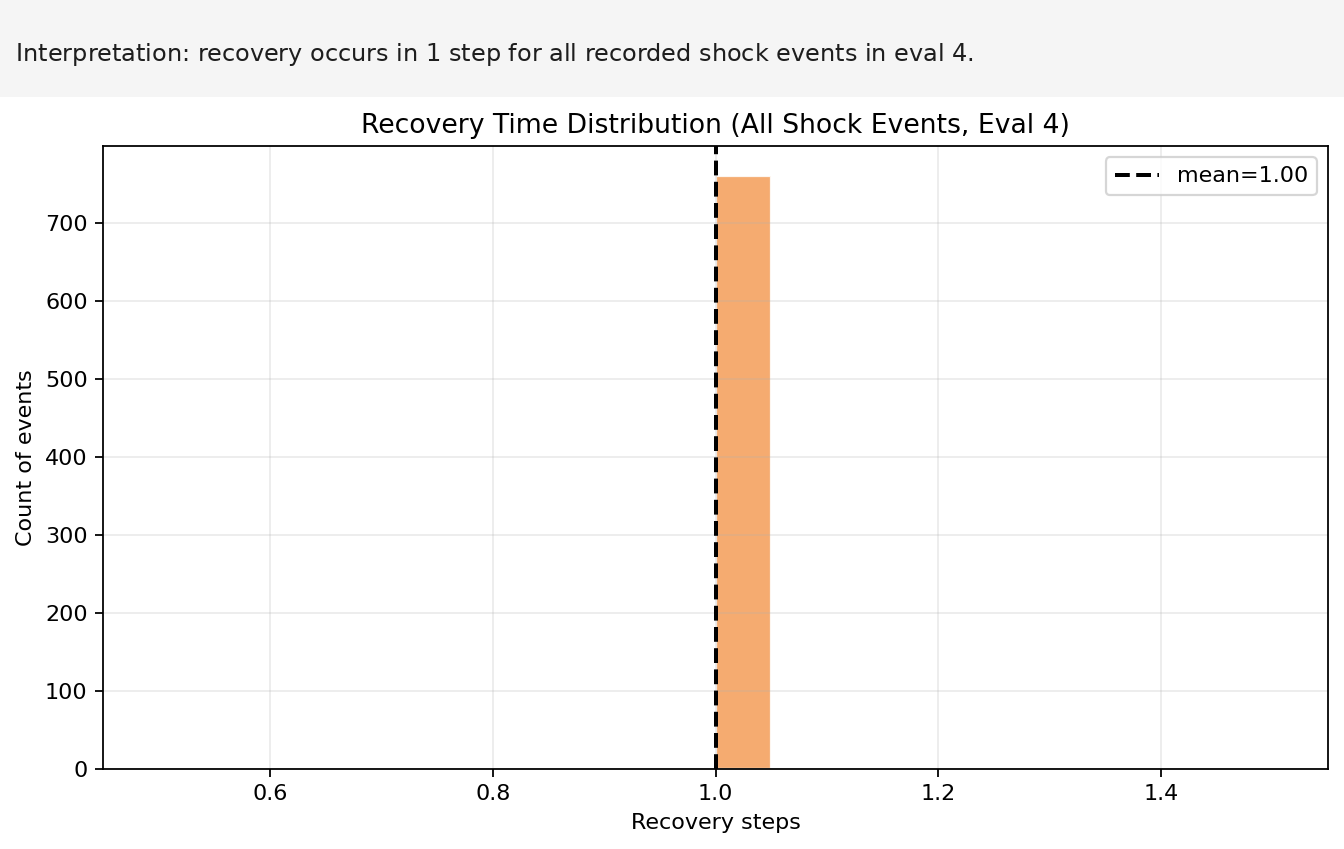
We demonstrate inZORi's adaptive capacity in a challenging streaming power flow scenario under extreme load/generation shocks, limited iteration budget (nr_max=8), periodic state subsampling (pf_interval=5), and sudden topology changes (N-1 line outages). Traditional fixed-strategy baselines suffer significant convergence degradation under the severe_plus regime (S3 convergence ~84–86%). The inZORi Frozen-Elite-16 runtime extension — offline-evolved genomes deployed at O(1) cost — achieves S3 ≈ 100%, a +15.2 percentage point improvement over Baseline B and +3.1 pp over Baseline A. Recovery times after N-1 events are ~7× faster than the periodic-reset baseline. All results are validated across 30 seeds with CI95 confidence intervals.
The PFΔ benchmark evaluates AI systems in realistic power grid operation scenarios where conditions drift continuously and solvers must adapt in real time. Unlike static benchmarks, PFΔ introduces:
nr_max=8) and periodic PF subsampling to mimic real-time SCADA refresh ratesReal-world grid operators cannot afford unlimited Newton-Raphson iterations per PF solve. When network conditions degrade (weak diagonal dominance, voltage collapse regimes), the solver either diverges, exhausts the budget, or requires manual intervention. This phase targets autonomous stability with zero online learning.
| Principle | Description |
|---|---|
| No RL/NN/Backpropagation | No gradient-based learning, no neural networks, no reinforcement learning |
| Energy & Memory | Organisms gain/lose energy based on PF solve success; thresholds trigger reproduction/death |
| Genome-Driven Parameters | 4-float genome (risk, memory_lr, jump_chance, step_scale) maps to PF parameters deterministically |
| Natural Selection | Only top-energy organisms reproduce; mutations are small Gaussian perturbations |
| World-Level PF Evaluation | Top-K candidates evaluated per step (not per organism) — 40–50× speedup vs naive implementation |
| Season | Steps (FULL) | Conditions | N-1 events |
|---|---|---|---|
| S0 (Spring) | 0–12,499 | Mild load variation | None |
| S1 (Summer) | 12,500–24,999 | Elevated loads, regional shocks | None |
| S2 (Autumn) | 25,000–37,499 | Peak stress + occasional shocks | None |
| S3 (Winter) | 37,500–49,999 | Severe stress + N-1 topology shocks | Every 900 steps |
| Method | Strategy | S3 Convergence |
|---|---|---|
| Baseline A | Warm-start tracking (always reuses previous solution) | 95.9% |
| Baseline B | Periodic reset (flat start every 500 steps) | 83.9% |
| inZORi FULL | Online evolutionary genome selection (K=2 top-K per step) | 99.1% |
| Frozen-Elite-16 | Pre-evolved pool, O(1) contextual selector, no online evolution | ~100% |
jump_chance triggering DC-init fallback.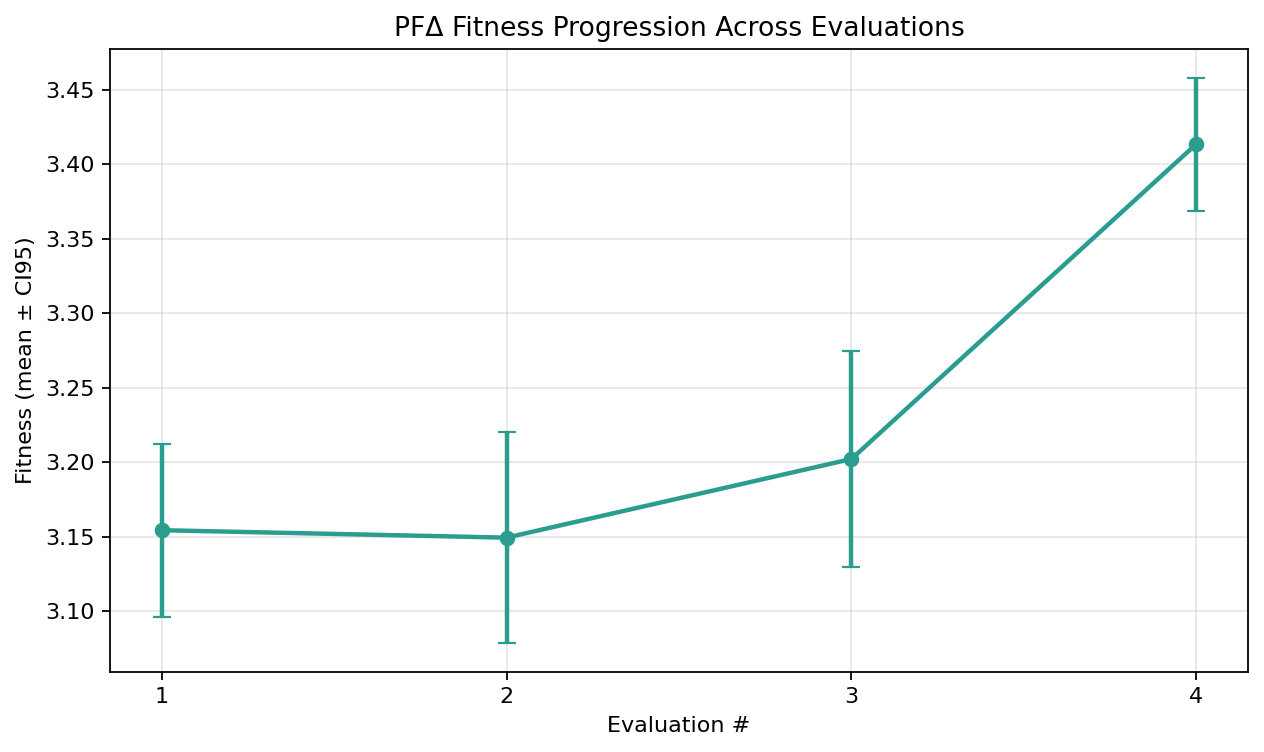
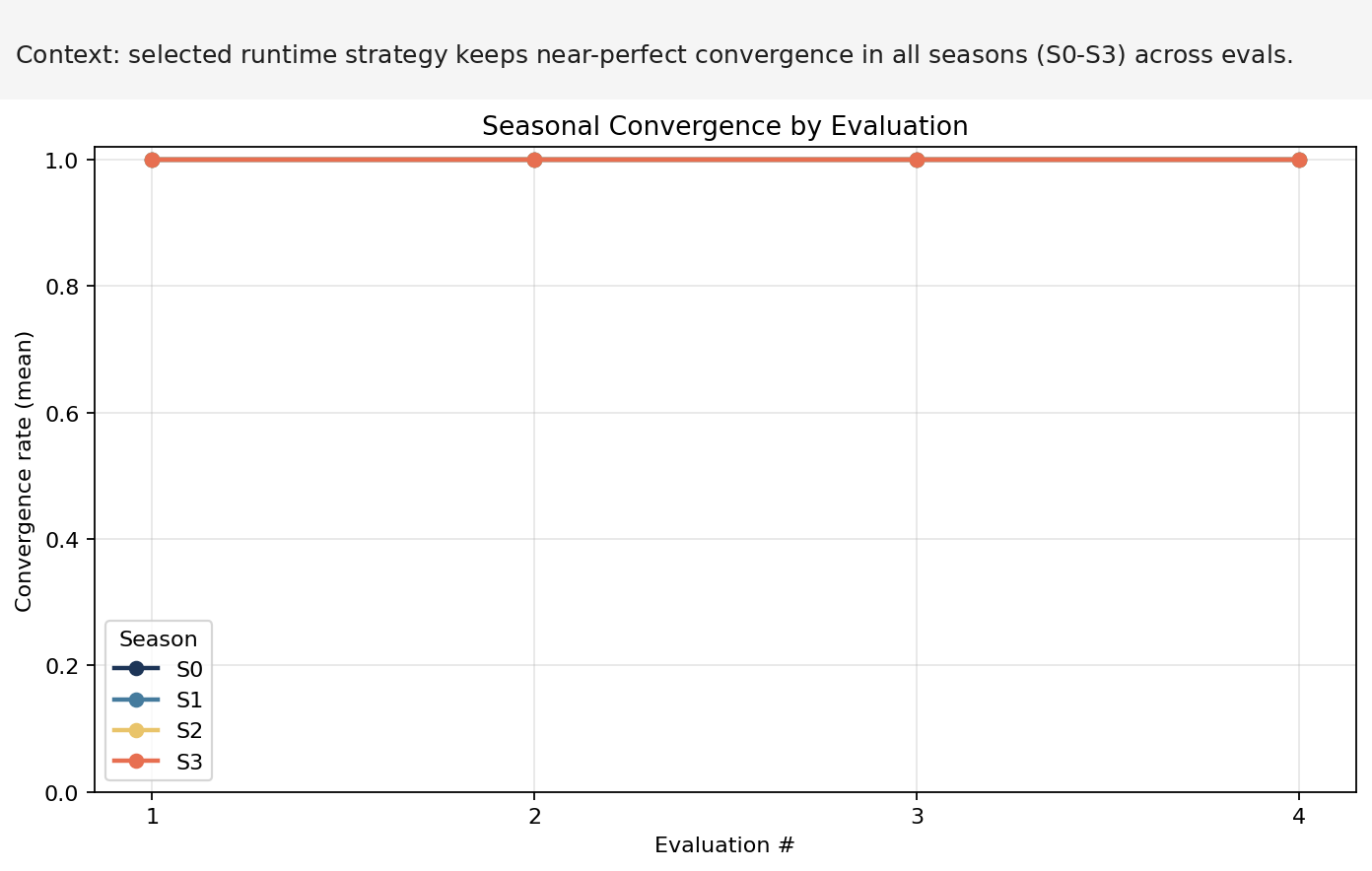
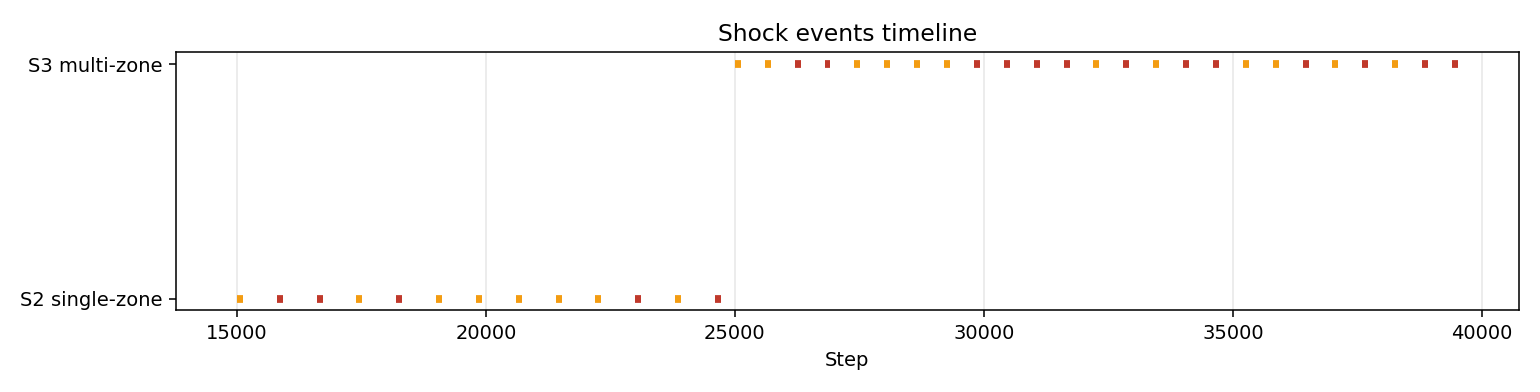
The key innovation of this phase is the Frozen-Elite-16 runtime approach: genomes are evolved offline once, then deployed as a fixed lookup pool at runtime. The contextual selector chooses among 16 pre-computed genomes based on:
jump_chance (DC-init retry) — automatic flat-restart when warm-start becomes invalidThis approach has direct operational implications: no GPU, no neural network inference, no online gradient computation — just a lookup table evaluated in microseconds per step.
jump_chance parameter — no explicit topology rule requiredRun Phase 1:
Key parameters: nr_max=8 · pf_interval=5 (DEV) / =1 (FULL) · N-1 every 900 steps (S3) · K=2 top-K world-level evaluation